
Keep provisional and verified dimensions separate
A customer can describe the desired footprint without knowing the final mounting or opening measurements. Record the measurement source, units and verification state. Width, projection and height must have consistent definitions: clear opening, overall frame and site footprint are not interchangeable. Attach the relevant drawing or survey record when a measurement becomes approved.
Document wall offsets, access constraints, door swings and changes in ground level before releasing an installation specification. An attractive render does not establish that the site measurements are correct. A Configurix workflow can structure the product inputs and required review steps around the manufacturer's catalog; the business still defines who verifies site conditions.
Translate product limits into selectable rules
Start with the actual product family, rather than a generic pergola shape. Permitted spans, post positions, roof systems, drainage options and accessory dependencies vary by range. Write down exclusions and required combinations so a salesperson cannot select an option that the chosen system does not support.
Test the boundary of each rule. Try a dimension just inside and outside a permitted range, a screen on an incompatible opening and an accessory requiring another component. Decide whether the software should prevent the choice, propose a valid alternative or route it to review. Structural calculations, local approvals and installation requirements remain separate responsibilities; do not present the configurator as automatically certifying every design.
Review the same configuration from several views
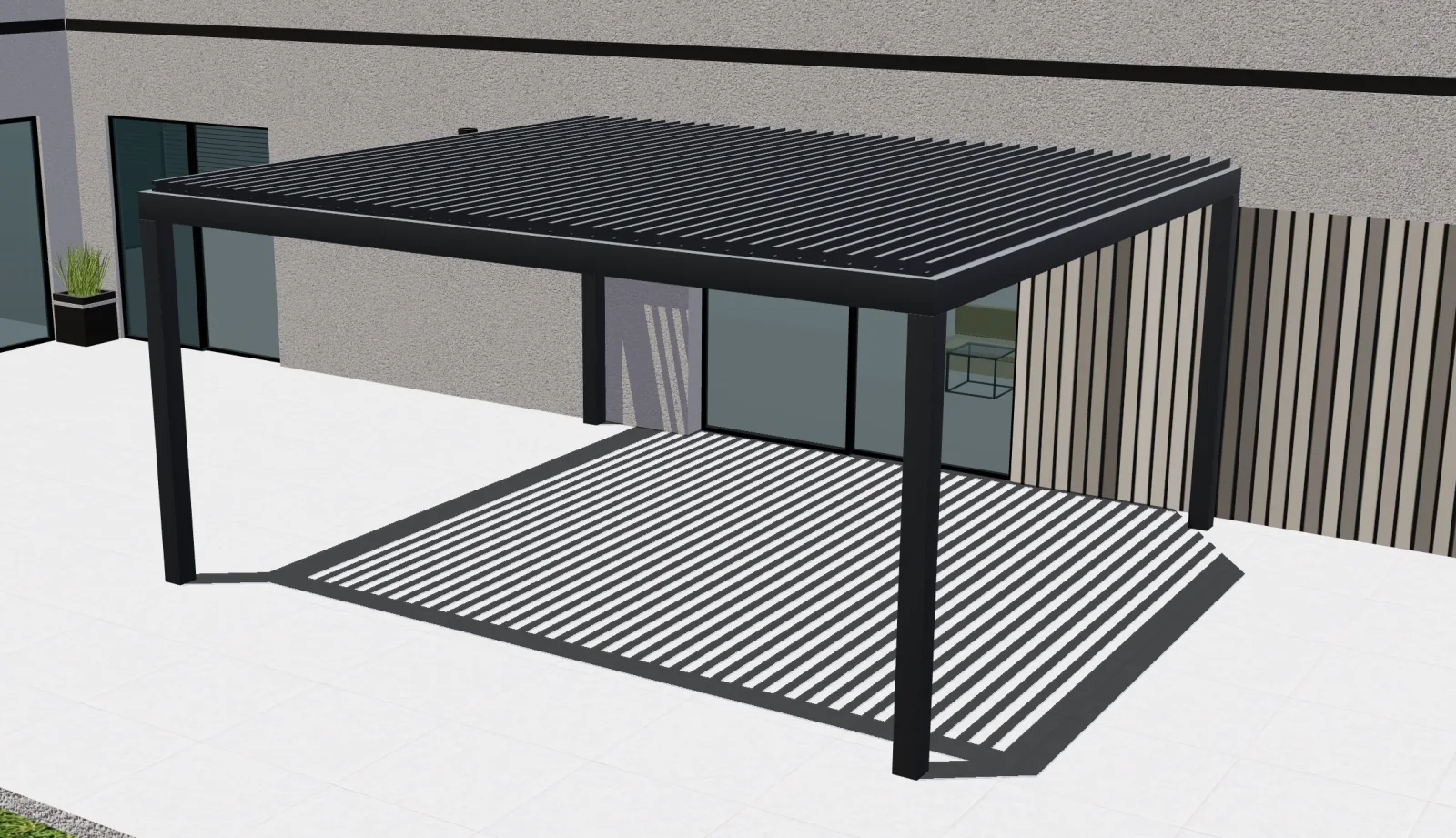
Use the product preview to check the arrangement with the buyer: roof direction, glazing divisions, screen openings, finish and visible frame members. A roof view can expose a layout issue that is easy to miss from the front. Change the selected options and confirm that the visual state follows the saved product data.
Configurix's supplied pergola views include louvred roofs, sliding-glass layouts and retractable fabric systems. These product previews help communicate choices before quotation. They are not photographs of a completed installation or proof that a particular site has been surveyed. For dimensional acceptance, compare the underlying specification with approved reference drawings and product limits.
Make changes visible to everyone using the project
Planning errors often arise after the first design: a customer changes glazing, sales changes the footprint or a survey alters the mounting arrangement. Preserve the revision and identify which quote, document and handoff record belongs to it. Do not let an old PDF remain the apparent current instruction after the product changes.
Agree who may revise a draft, issue a proposal, approve a change and release an order. A change to geometry can affect component quantities, price and documents, so the impact review should cover more than the 3D scene. Issued and accepted commercial records need a deliberate revision or change process.
Use an explicit release check
Before the project moves to production or installation, confirm the approved configuration revision, verified dimensions, product options, required documents and responsible owner. If a BOM or export is in scope, reconcile it against a known design. A list of components that omits mounting hardware is not complete simply because its totals add up.
Configurix implementation should be evaluated against these real examples, including invalid combinations and later changes. Build the acceptance checks with sales, technical and operational owners. Repeat affected tests when introducing a roof family, component or dimensional rule so the original planning assumptions do not drift as the catalog grows.
What to check with your team
- Units and dimension definitions consistent
- Provisional measurements visibly distinct from verified inputs
- Product limits and dependent options tested
- Current configuration revision matches its documents
- Technical and installation approvals assigned to named roles