
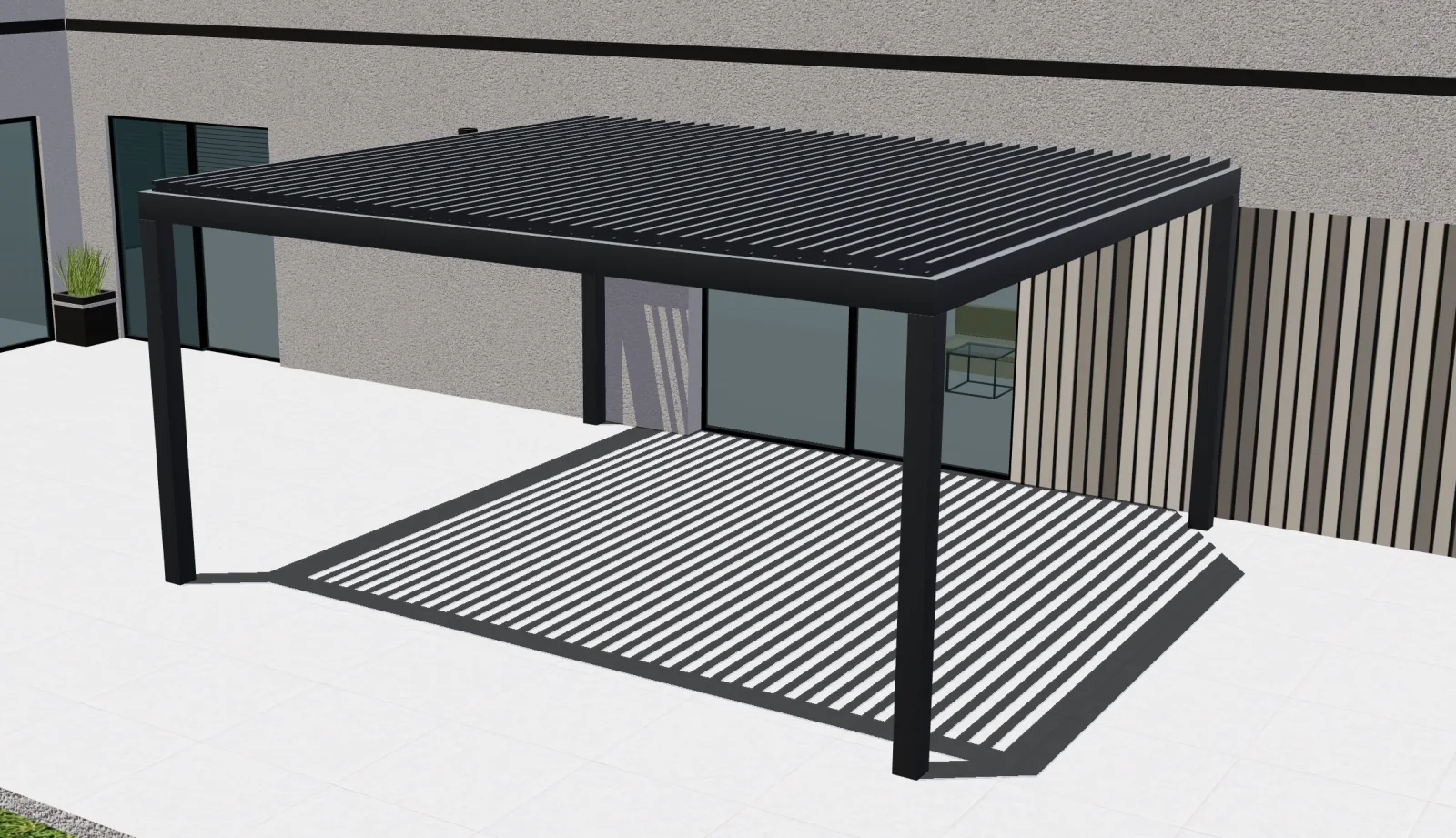
Start with a complete configuration
A width and projection are not a complete quotation specification. Record the product family, attachment type, post arrangement, roof system, frame finish and selected accessories. Glazing and screens need their opening dimensions and layout, not only a yes-or-no selection. Distinguish a customer preference from a surveyed measurement so the quotation does not silently treat provisional dimensions as installation-ready data.
Use the same saved configuration for the product preview and the commercial calculation. A separate spreadsheet or manually rewritten specification can omit a change made during the sales conversation. In a Configurix implementation, the product model and the agreed pricing workflow are connected; the manufacturer supplies the permitted choices and commercial rules.
Give every price line an explicit basis
Different items may be priced per unit, length, area, bay or package. A screen priced by opening size cannot be treated like a fixed-price remote control. Identify the quantity basis, minimum charge and rounding rule for each component. Keep installation, delivery, tax and discretionary discount lines separate so the salesperson can explain what is included.
Match commercial lines to stable item identifiers. Labels can change between languages or catalog editions; a SKU should still identify the relevant item. Configurix built automatic quotation software for Elite Aluminum that includes SKU numbers for individual items. That approved implementation demonstrates item-level quotation scope, without implying that another manufacturer's price list is already configured.
Reconcile known quotes before automating them
Choose examples your commercial team has already checked: a standard pergola, a minimum-size unit, a larger permitted design, an enclosed design and a package with several accessories. Compare quantities and individual lines before comparing the final total. Two incorrect lines can cancel each other out and produce a deceptively correct total.
Test changes around price thresholds and options that require another component. Add and remove glazing, change the finish, cross a dimensional boundary and apply an authorized discount. A useful acceptance record names the configuration, expected calculation, actual result and person approving the rule. Fix a formula once in the governed price model rather than teaching salespeople to compensate manually.
Separate current prices from issued proposals
New configurations should use the current approved price rules. A saved draft needs an explicit repricing policy: the salesperson should know whether opening or editing it recalculates the price. An issued quote should preserve its specification, commercial terms and revision unless someone deliberately creates a revised proposal. Updating a price list must not be described as silently changing every proposal already sent.
Accepted orders need a controlled change process too. Record the requested change, price difference and approval before replacing the accepted specification. Agree these states during implementation and verify them with a quote sent under one price list followed by a new price-list release.
Send a usable record to the next team
A PDF should explain the selected product, scope, exclusions, price, validity and next step. Internal teams may also need item SKUs, quantities, approved dimensions and the configuration revision. Decide which information is customer-facing and which belongs in an internal order or production record. BOMs, drawings and connected-system exports must be defined and tested for the particular implementation.
Evaluate Configurix with a real product range and a quote your team knows is correct. The goal is a repeatable configuration-to-quotation process, not simply a faster-looking screen. Keep a commercial owner responsible for price updates and repeat the known-quote checks when the catalog or calculation changes.
What to check with your team
- Approved product specification and dimension status
- Quantity basis and SKU for each priced item
- Known-price examples reconciled line by line
- Explicit draft, issued-quote and order revision rules
- Customer PDF and internal handoff fields agreed