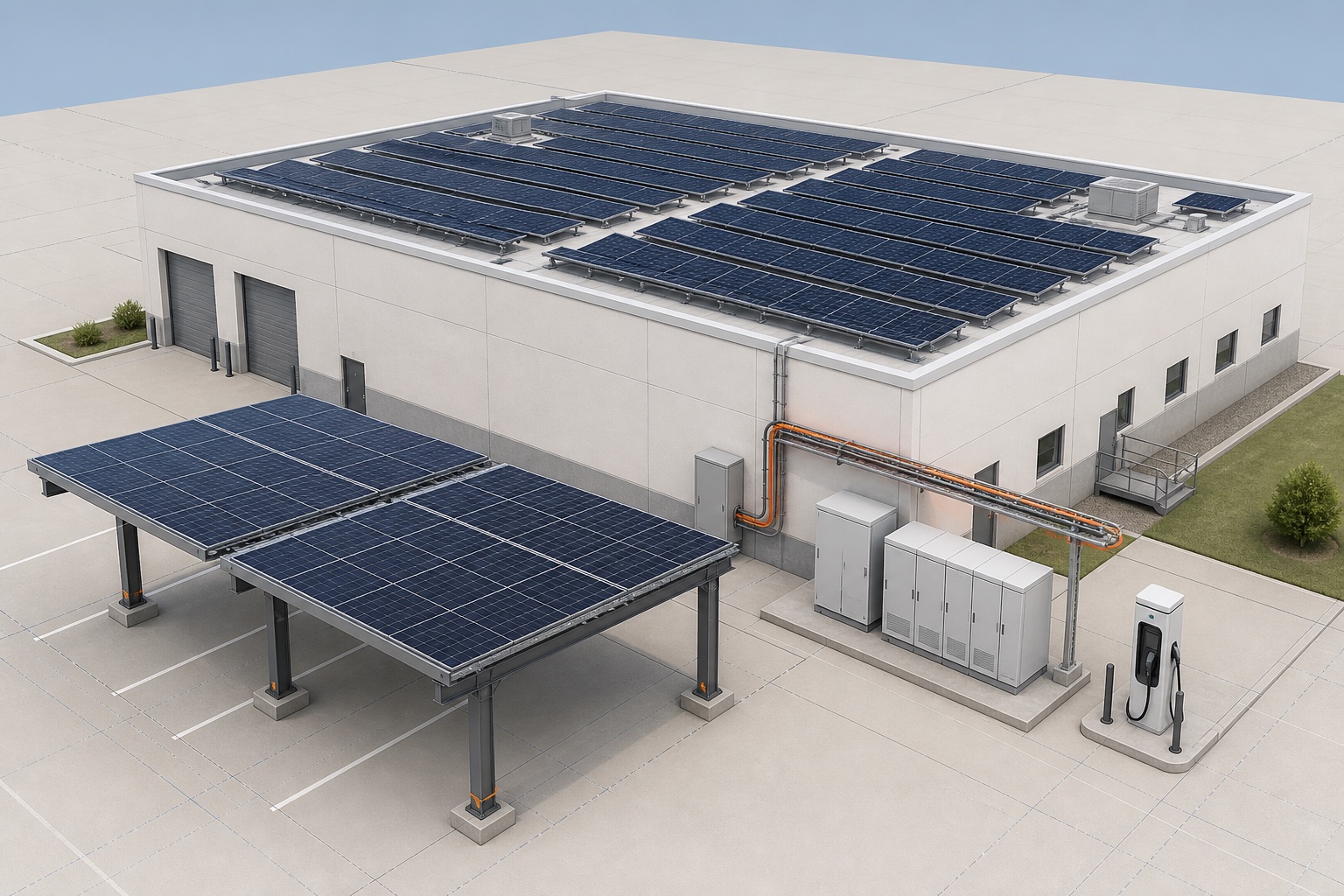
Solar product configuration begins with a defined project and governed equipment data. The workflow can connect building or site zones, permitted module and mounting families, inverter and storage packages, electrical accessories, services and commercial rules while preserving the source and status of the inputs.
A 3D layout makes the proposal understandable. Users can see module placement, roof or canopy coverage, excluded zones, batteries, inverters and charging equipment. That visual context supports customer communication and review, but does not independently validate irradiance, shade, energy yield, roof condition, loading, fixing, electrical design, fire access or grid connection.
Visual CPQ connects the accepted equipment package to account prices, labour, access, permits, commissioning, proposals, revisions and approvals. Installers and manufacturers can govern shared catalogues while distributors, branches, dealer teams and customers receive the products, terms, languages and documents intended for them.
Specialist solar calculations can be integrated when the method, dataset, inputs, units and acceptance process are defined. Otherwise Configurix should capture an approved capacity or analysis result and preserve its source rather than inventing a production or savings figure from an attractive layout.